Your packaging arrives at your customer’s door. The logo is a rich, warm purple on your Instagram - elegant, premium, unmistakably yours. On the box? A muddy, greyish violet that looks nothing like what they ordered from.
That gap isn’t a printing error. It’s a branding failure - and it happens to D2C founders every day because no one told them that color has a language. And that language is called Pantone.
This post will show you what Pantone actually is, why color consistency is one of the most underrated growth levers in D2C branding, and exactly how to use the Pantone system to make sure your brand looks the same whether it’s on a phone screen, a shipping box, or a retail shelf.
TL;DR - Key Takeaways:
Color influences up to 85% of purchase decisions and can improve brand recognition by up to 80%
Pantone’s Matching System (PMS) gives every color a unique code - ensuring exact reproduction across print, packaging, and digital
D2C brands need three color formats: HEX for digital, CMYK for print, PMS for brand consistency
Pantone 2026 Color of the Year is Cloud Dancer - an off-white signalling calm and modern luxury
Without a documented Pantone reference in your brand guidelines, every vendor will interpret your colors differently
What Is Pantone - And Why Should D2C Founders Care?
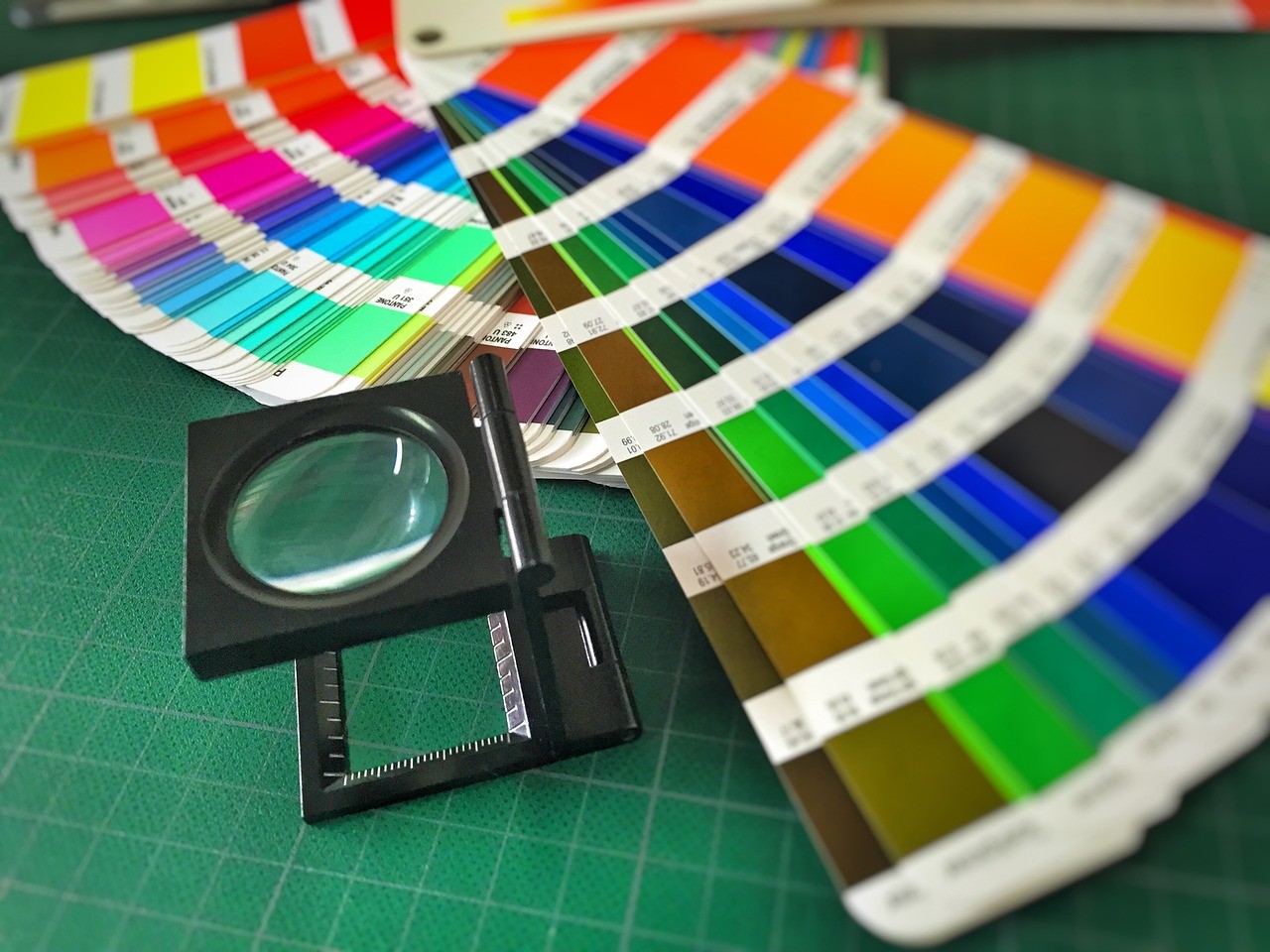
Pantone is a color standardization company that created the Pantone Matching System (PMS) - a universal color language used by designers, printers, and manufacturers across the world.
Here’s the simple version: Pantone has catalogued thousands of colors and assigned each one a unique number. PMS 268 C is a specific deep purple. Not “a purple” - that purple. The same one, every time, on every material, with every printer, in every country.
For a D2C founder, this matters more than most people realize. When you brief your logo designer, you’re working on a screen with RGB colors. When you send that logo to your packaging printer, they work in CMYK. When you brief a freelancer on your ad creatives, they’re using HEX codes. Without a Pantone reference to anchor all of these, each touchpoint is interpreting your brand color differently - and your brand is quietly fracturing across every channel.
Think of Pantone as the common language that makes sure everyone building your brand is speaking in the same dialect.
The Pantone Matching System was developed in the 1960s to solve color consistency issues in printing. Today, over 10 million designers and manufacturers use it daily - and it has expanded well beyond print into fashion, packaging, interior design, and digital media. For D2C brands competing on visual identity, it’s not an optional tool. It’s brand infrastructure.
The Real Cost of Color Inconsistency for D2C Brands
Most D2C founders underestimate what inconsistent color actually costs them. It doesn’t show up as a line item in your P&L - it shows up in lower conversion rates, weaker brand recall, and eroding trust across every touchpoint.
Consider this: research consistently shows that 85% of consumers cite color as the primary reason for choosing one product over another. And brands that maintain consistent color usage see up to 80% improvement in brand recognition. Consistency isn’t a design nicety - it’s a growth lever.
Here’s what color inconsistency actually looks like for a D2C brand:
Scenario 1: The Instagram-to-Packaging Gap Your product photography is shot with warm lighting and color-corrected for screen. The packaging was printed by a vendor who used their own CMYK interpretation of your brand color. The customer receives the product and something feels slightly off - even if they can’t articulate it. That micro-friction erodes trust.
Scenario 2: The Freelancer Problem You’ve had three different designers work on your brand over two years. Each one pulled their “purple” from a slightly different reference. Your stories look different from your website, which looks different from your ads. The cumulative effect is that your brand feels inconsistent - even if each individual piece looks fine in isolation.
Scenario 3: The Scale Problem You launch on a new marketplace or start working with a packaging partner for a new SKU. Without a Pantone reference, they approximate your brand color. At low volumes, it’s barely noticeable. At scale, the visual debt compounds - and a rebrand or brand audit becomes expensive.
This is exactly the kind of visual inconsistency that a strong D2C brand identity design process is designed to prevent. Color documentation isn’t the last step in brand identity - it’s the anchor.
How Pantone Solves the Color Consistency Problem
The Pantone Matching System works like this: each color has a number (like PMS 268 C), a specific ink formula, and a physical swatch that serves as the definitive reference.
When you specify PMS 268 C as your brand purple, you can hand that number to:
Your packaging printer in Delhi
A merchandise supplier in Tirupur
A freelance designer in Bangalore
A marketing agency in Dubai
Every one of them will produce the exact same shade. No interpretation, no guesswork, no drift.
For D2C brands, this plays out practically in several ways:
Packaging consistency: When your product packaging, your shipping mailer, and your branded tissue paper all reference the same PMS code, they will match - regardless of the printing process or the vendor. This is especially critical for D2C packaging design where the unboxing moment is a brand moment.
Cross-vendor alignment: D2C brands often work with multiple vendors simultaneously - one for boxes, one for pouches, one for labels. Without a Pantone anchor, each vendor produces a slightly different version of your brand. With it, they all speak the same color language.
Design handoffs: When you brief a new designer or agency, handing them your PMS codes alongside your HEX and CMYK values means they can produce on-brand work without needing to reverse-engineer your color from a screenshot.
At Miracle Studio, when we build brand identity systems for D2C founders, Pantone references are always included in the brand guidelines - not as a bonus, but as a core deliverable. It’s one of the essential elements that separates a brand that scales cleanly from one that accumulates visual debt every time a new vendor or designer touches it.
Pantone vs HEX vs CMYK vs RGB - Which Does Your D2C Brand Actually Need?
The honest answer: all of them. But each serves a different purpose, and understanding which format belongs where will save you a significant amount of frustration.
RGB (Red, Green, Blue)
RGB is used for screens - your phone, your laptop, your monitor. When your designer builds your logo in a design tool, they’re working in RGB. This is the format for digital ads, website colors, and social media assets.
When to use it: Digital advertising, website design, email templates, social media creatives.
HEX Codes
HEX is simply RGB expressed as a six-digit code (like #6C4099). It’s the language of the web - used in CSS, website builders, and digital design tools.
When to use it: Website development, digital brand guidelines, Canva or Figma templates.
CMYK (Cyan, Magenta, Yellow, Black)
CMYK is the color model used in commercial printing. When a printer produces your packaging or business cards, they’re mixing cyan, magenta, yellow, and black inks in specific ratios to produce your color.
The problem: CMYK can’t reproduce every color that RGB can. This is why your brand purple might look slightly different on screen vs. in print - and why relying on CMYK alone without a Pantone reference creates inconsistency.
When to use it: Printed marketing materials, product labels, business cards.
PMS (Pantone Matching System)
PMS is the anchor. It’s a pre-mixed ink system that produces colors more accurately and consistently than four-color CMYK printing - especially for specific brand colors that need to be precise.
When to use it: Brand guidelines, packaging, any print production where color accuracy is non-negotiable.
The D2C brand color documentation stack:
Format | Use Case | Example |
|---|---|---|
PMS | Packaging, print, brand guidelines | PMS 268 C |
CMYK | Standard printing, brochures | C:60 M:85 Y:0 K:15 |
HEX | Web, digital ads, social |
|
RGB | Screen design, digital assets | R:108 G:64 B:153 |
If your current brand guidelines only list HEX codes, that’s the first thing to fix. A complete D2C design systemdocuments all four formats for every brand color - so that whoever is touching your brand, at whatever scale, has exactly what they need.
Pantone Color of the Year 2026: Cloud Dancer - What It Means for D2C Brands
Every year since 2000, the Pantone Color Institute selects a Color of the Year - a shade that reflects global design trends, cultural shifts, and consumer sentiment. For 2026, that color is Cloud Dancer (PANTONE 11-4201): a soft, airy off-white that signals calm, clarity, and a deliberate reset.
It’s the first off-white Color of the Year, and it arrives at a moment when consumers are pulling back from overstimulation - from maximalist feeds, from loud branding, from constant noise. Cloud Dancer is a design permission slip to simplify.
What this means for D2C brands in 2026:
For skincare and wellness brands, Cloud Dancer is a natural fit - it reinforces the clean, minimal, ingredient-led aesthetic that resonates with health-conscious buyers. For food and beverage brands, it signals premium simplicity and craft. For fashion and lifestyle brands, it provides a versatile backdrop that makes product colors pop.
A word of caution: Trend colors are interesting. Your brand color is essential. The most common mistake D2C founders make when Pantone releases a new Color of the Year is either ignoring it entirely or overcorrecting - throwing their brand palette out for a trend color that may not survive the year.
The smarter play: use Cloud Dancer as an accent - a backdrop in photography, a secondary color in seasonal packaging, or a design element in your digital content. Let it complement your brand identity rather than compete with it.
Brands that aligned with Pantone’s 2023 Color of the Year, Viva Magenta, saw 15–25% higher engagement on those products. The lesson isn’t that you should always chase the Color of the Year - it’s that intentional, well-considered color choices drive measurable results.
This connects directly to the foundation work every D2C founder needs to do before launch - understanding your color psychology before you start responding to external trends.
How to Choose and Document Your D2C Brand’s Pantone Colors
If you haven’t documented your brand colors in Pantone format yet, here’s how to approach it - whether you’re starting from scratch or working backward from an existing logo.
Step 1: Start from Brand Positioning, Not Aesthetics
Color should be derived from meaning, not preference. Before you pick a shade, answer:
What emotion do you want your brand to trigger at first glance?
Who is your buyer, and what visual language resonates with their identity?
What are your competitors using - and how do you differentiate?
A skincare brand targeting urban women aged 25–35 who value clinical efficacy will use very different colors from one targeting the same demographic but leading with spirituality and ritual. Both could use purple - but the shade, the saturation, and the supporting palette would be completely different.
This is the kind of color strategy work that sits inside a comprehensive brand identity process - not a logo design exercise.
Step 2: Use the Pantone Color Finder to Match Your Existing Colors
If you already have a logo with HEX or CMYK values, you can use the Pantone Color Finder (available on pantone.com) to identify the closest PMS match. This is imperfect - not every digital color has an exact Pantone equivalent - but the closest PMS code gives vendors a reliable reference.
For new brands, work with your designer to select PMS colors upfront - before the logo is finalized - so that the digital versions are derived from the physical reference, not the other way around.
Step 3: Build Your Color Documentation
Every D2C brand needs a documented color stack for each brand color. For your primary color, that might look like:
This documentation goes into your brand guidelines - the living document that every designer, printer, vendor, and marketing partner references. Without it, your brand color exists only in someone’s interpretation of a screenshot.
Step 4: Specify Pantone in Every Print Brief
Once you have your PMS codes documented, use them proactively. When you brief any print vendor - packaging supplier, label printer, merchandise manufacturer - include your PMS codes in the brief. Most professional printers can match to Pantone. The ones who say they can’t are telling you something important.
For D2C brands, this is particularly critical for packaging, where consistent visual identity across every touchpoint is what turns a first-time buyer into a customer who photographs your product and shares it.
FAQ: Pantone Colors for D2C Brands
Do I need Pantone if I’m a small D2C brand just starting out?
Yes - but you don’t need to invest in physical Pantone guides immediately. Start by documenting the closest PMS code for each of your brand colors (use the free Pantone Color Finder online) and including those codes in your brand guidelines. The investment in a physical Pantone TCX guide (₹8,000–15,000) makes sense once you’re working with fabric, packaging, or merchandise at scale. At the early stage, having the PMS code documented is the baseline - it costs nothing and prevents expensive color drift later.
What’s the difference between Pantone PMS and Pantone TCX?
PMS (Pantone Matching System) is used primarily for graphic design and print applications - packaging, labels, business cards, printed marketing materials. TCX (Textile Color eXchange) is Pantone’s color system for textiles and soft goods - it’s used in fabric dyeing, apparel manufacturing, and soft furnishings. For most D2C brands in product and packaging categories, PMS is the relevant system. If you’re in apparel or home goods with significant fabric components, you’ll likely need both.
How much does it cost to get Pantone-matched packaging in India?
Most professional packaging printers in India can accommodate Pantone-matched print runs - the cost depends on volume, material, and finish rather than the Pantone specification itself. Spot color printing (using a specific Pantone ink) typically costs slightly more than four-color CMYK printing, but the color accuracy payoff is significant for brand-critical elements like your logo and primary brand color. Ask your packaging vendor specifically whether they offer spot color Pantone matching, and factor in a proof round to verify color accuracy before committing to a full run.
Should I use Pantone for my digital assets too?
Not directly - Pantone is a physical color system, and screens display colors in RGB. However, Pantone does offer digital color tools and a system called Pantone Connect that bridges physical and digital color applications. For most D2C brands, the practical approach is to use your HEX codes for digital assets, and keep your PMS codes as the anchor reference for anything printed or physically produced. The key is consistency within each context - your digital purple should be derived from and visually consistent with your physical Pantone reference, even if the technical format differs.
What is Pantone’s Color of the Year for 2026?
Pantone’s 2026 Color of the Year is Cloud Dancer (PANTONE 11-4201) - a soft, airy off-white chosen to represent calm, clarity, and a deliberate reset. It’s Pantone’s first off-white Color of the Year. For D2C brands, it offers an opportunity to incorporate minimalist, clean aesthetics into seasonal packaging, product photography, and digital content - particularly relevant for wellness, skincare, and lifestyle categories.
Your Color Is the First Word Your Brand Speaks
Before a customer reads your product name. Before they see your tagline. Before they engage with your story. They see your color.
That color triggers an emotion, makes an association, and starts building a perception - in less than a second. The brands that grow without bleeding on ad spend are the ones that made sure that first word was said clearly, consistently, and correctly - everywhere.
Pantone doesn’t make branding creative decisions for you. It ensures that once you’ve made those decisions, they’re expressed with precision across every vendor, every platform, and every customer touchpoint - from the first Instagram impression to the moment the box lands on your customer’s doorstep.
If your brand guidelines don’t currently include Pantone references - or if your brand doesn’t have guidelines at all - that’s the most impactful fix you can make before your next packaging run or creative brief.
At Miracle Studio, we build brand identity systems for D2C founders that include full color documentation: PMS, CMYK, HEX, and RGB - alongside logo files, typography, photography direction, and brand voice. Everything a printer, designer, or marketing partner needs to represent your brand correctly, from day one.
Ready to build a brand that looks the same everywhere it shows up? Book a free 30-minute brand strategy call and walk away with clarity on where your brand’s color consistency stands - and exactly what to do about it.
Miracle Studio is a brand identity and design agency for D2C founders. We build visual identity systems that look confident, feel trustworthy, and scale with your business. Based in Faridabad, India. Working with brands across India and the Middle East.