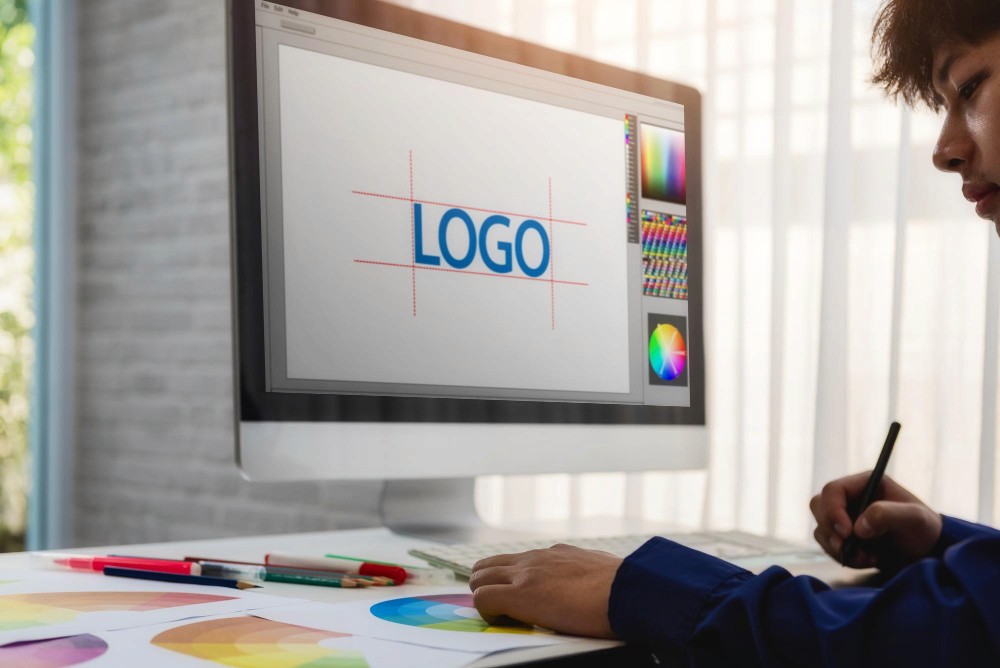
You found a free logo maker. Canva, Looka, Hatchful, Adobe Express - they all promise a professional logo in minutes. No design skills needed. No invoice at the end.
So you spend an hour tweaking templates, picking a font, swapping colours. And you end up with something that looks… fine. Good enough. Launch-ready.
Here’s the problem: “good enough” is the most expensive position in branding.
This post gives you an honest, practical answer to the question every founder eventually asks - can a free online logo maker actually work for my brand, or is it holding me back?
TL;DR - Key Takeaways
Free logo makers work for proof-of-concept and pre-revenue testing, nothing more
Template-based logos have zero trademark protection and near-zero originality
Indian D2C founders routinely rebrand within 12–18 months of using a free tool - at significantly higher cost
A professional brand identity system costs ₹40,000–₹1,20,000 and pays for itself when it increases trust, conversion, and repeat purchase
If you’re taking investment, selling on Amazon/Flipkart, or building for acquisition, a free logo will actively work against you
What Free Logo Makers Actually Give You
Free logo makers like Canva, Looka, Hatchful (Shopify), Adobe Express, and Logo.com are template engines. You input a business name, pick a category, select a colour palette, and the tool generates variations based on a library of icons and font combinations.
What you get:
A PNG or JPG file (sometimes SVG, sometimes behind a paywall)
A logo built on a template shared by thousands of other businesses
No strategic thinking behind colour choice, typeface selection, or mark design
No understanding of your audience, your category, or your competitive position
What you don’t get:
A custom mark that’s uniquely yours
Vector source files you fully own (often locked to the platform)
Scalable brand guidelines - colour codes, spacing rules, usage do’s and don’ts
A designer who asks: Who are your customers? What do you want them to feel? Who are you competing with?
The tool does the easy part. It skips the entire part that actually makes a logo work.
The 5 Real Problems with Free Logo Makers for D2C Brands
1. Your logo will look like someone else’s logo
Free logo makers draw from finite icon libraries and font combinations. When thousands of businesses use the same tool in the same category, the visual outcome converges. A quick search on Amazon India in any fast-growing category - skincare, supplements, snacks - will show you exactly how similar these logos look.
Your logo is the first signal customers use to assess whether your brand is worth trusting. If it looks like three other brands in your category, you’ve already lost the attention game before anyone reads your claims.
2. You can’t trademark a template
Trademark protection in India requires that your logo be original and distinctive. A logo generated from a shared template library - even with slight modifications - is difficult or impossible to trademark because the underlying graphic elements are not exclusively yours.
If you’re building a brand with long-term value, this is a critical problem. Your brand identity is an asset. An asset you can’t protect has limited value.
3. The logo doesn’t communicate strategy
A professional logo is the output of a strategic process: who is your customer, what position do you want to own in their mind, what emotion should your visual identity trigger, how does your logo behave on packaging, on Meta ads, on a 1cm favicon?
Free logo makers skip this entirely. The result is a mark that might look pretty in isolation but fails across real-world applications - a dark background, a small size, an embossed label, a printed box.
4. Rebranding costs more than getting it right once
Most Indian D2C founders who launch with a free logo end up rebranding within 12–24 months. By that point, they have:
Product packaging that needs to be reprinted
Social media pages to overhaul
Ads that reference the old visual identity
A customer base that’s built limited recognition around an identity they’re abandoning
The rebranding cost - design fees, reprinting, digital asset updates, lost brand recognition equity - is almost always higher than investing in a proper identity upfront.
5. Free logos read as “not serious” to the buyers who matter most
Investors, retail buyers, institutional partners, and premium DTC customers have pattern recognition. A template logo signals that the founder hasn’t committed to the brand - which makes them wonder what else the founder hasn’t committed to.
If you’re pitching for shelf space at a modern trade retailer, applying for a quick-commerce listing, or meeting an angel investor, your visual identity is the first piece of due diligence they perform. It happens before you say a word.
When a Free Logo Maker Is Actually the Right Call
There are situations where a free tool is genuinely appropriate:
Validation stage (pre-revenue): You’re testing a product idea and need a placeholder identity to run a landing page or ads. You know you’ll rebrand when you find product-market fit. Use the free tool. Don’t invest in brand identity until you’ve validated the core offer.
Internal projects: An internal tool, a side hustle, a community page - anything that isn’t your primary commercial brand.
Budget truly at zero: If you have no money and no revenue, a free logo is better than no logo. Just plan the rebrand into your 6-month roadmap.
The honest test: are you expecting this logo to represent you to paying customers for more than six months? If yes, a free tool is the wrong choice.
What “Proper” Brand Identity Actually Costs in India
One of the reasons founders reach for free tools is a misconception about professional design pricing. Here’s what the market actually looks like for Indian D2C brands in 2025:
Level | What You Get | Price Range |
|---|---|---|
Freelance (Fiverr/Upwork) | Logo file, limited revisions, no strategy | ₹2,000–₹15,000 |
Mid-tier freelancer | Logo + colour palette + basic guidelines | ₹15,000–₹35,000 |
Studio (brand-specialist) | Logo system + full identity + guidelines + collateral | ₹40,000–₹1,20,000 |
Agency (full-service) | Everything above + positioning strategy + brand voice | ₹1,50,000+ |
For most early-stage D2C brands, a brand-specialist studio at the ₹40,000–₹80,000 range is the right investment - not the cheapest option, but the one that gives you a defensible, distinctive identity system you can actually build on.
What this includes at a proper studio like Miracle Studio: primary and secondary logo marks, full colour system with hex/CMYK/Pantone values, typography hierarchy, brand pattern, usage guidelines, and collateral templates. Not just a logo file.
What to Look for When Hiring a Brand Identity Designer
They ask strategy questions first. Any designer who asks for your colour preferences before asking about your customer is working backwards. Good brand design starts with positioning.
They show process, not just portfolio. You want to see how they think, not just what they’ve made. Ask for a case study that shows the brief, the exploration, and the rationale behind the final choice.
They deliver brand guidelines, not just a logo file. A logo file without guidelines is a car without a manual. You need to know exactly how to use it - and how not to.
They have packaging or product experience. For D2C brands, your logo will live on a box, a pouch, a bottle label. A designer who only builds screen-based logos won’t understand how your identity behaves in print.
They’re India-based or India-aware. Your customers are Indian. A designer who understands Indian consumer behaviour, packaging print standards, and quick-commerce photography requirements will give you something that works in your specific context.
The Free Logo Maker Checklist - A Brutally Honest Test
Before you go live with a free logo, answer these honestly:
Does your logo look different from at least 5 other brands in your category?
Have you tested it on your actual packaging at actual size?
Does it work in white-on-dark and dark-on-white?
Can you get a vector SVG file you fully own (not locked to the platform)?
Would you feel confident showing this to an investor or retail buyer?
Is there a coherent strategy behind the colour and type choices?
If you answered “no” to more than two of these, the logo isn’t ready for commercial use - regardless of whether you paid for it.
Brands That Got It Right From the Start
The Indian D2C brands that built real brand equity in 2020–2025 - Mamaearth, mCaffeine, The Whole Truth, Faces Canada, Dr. Sheth’s - all invested in distinctive brand identity before they scaled distribution or marketing spend.
The lesson isn’t that you need a ₹10 lakh rebrand. It’s that the visual identity work needed to happen before the marketing investment, not after it. Every rupee you spend marketing an inconsistent or generic brand identity is partially wasted.
The brands that got this sequencing right spent relatively modest amounts early on a coherent identity system, then scaled that system across every customer touchpoint as they grew.
Should You Use a Free Logo Maker? The Final Answer
Use a free logo maker if: You’re pre-revenue, testing a concept, or genuinely have no budget right now. Treat it as a placeholder. Plan the real identity work for month 3–6 after your first revenue.
Don’t use a free logo maker if: You’re taking your product to market seriously, investing in paid advertising, pursuing retail or quick-commerce listings, building for investment, or planning to operate this brand for more than a year.
The question isn’t really “free vs paid.” It’s whether your visual identity is actually doing the job it needs to do - make the right customer stop, trust you, and buy.
If your logo can’t do that, it’s not free. It’s expensive.
Frequently Asked Questions
Can I use a free online logo for a registered business in India?
Technically yes, but there are two risks. Template-based logos are hard to trademark because they use shared graphic elements. If another business used the same template, you could face brand confusion or legal challenges. For any business you intend to register, grow, or sell, a custom mark is strongly recommended.
Are paid logo makers like Looka or Tailor Brands worth it?
Paid logo generators give you more customisation and cleaner file formats, but the fundamental limitation remains: they’re template-based. The step up to a specialist studio is worth more than the premium tier of any logo generator.
How long does professional brand identity design take?
A complete brand identity - logo system, colour palette, typography, usage guidelines - typically takes 10–21 working days from brief to final delivery. At Miracle Studio, first concepts are delivered in 28 hours, with the full system completed within the project timeline.
What files should I receive from a brand identity project?
You should receive: AI/EPS and SVG vector source files, PNG exports (transparent background, white, black), JPEG files for social use, a PDF brand guidelines document, and all font files. If a designer delivers only a PNG logo, the project isn’t complete.
What’s the minimum I should spend on a logo for my D2C brand?
Spending less than ₹15,000 on a logo for a serious commercial brand is almost always a false economy. For a brand you’re investing marketing budget behind, budget for at least a mid-tier freelancer or an entry-level studio engagement.
Building a D2C brand and not sure where your identity stands? Miracle Studio works with early-stage and growing D2C brands on brand identity, packaging design, and visual systems built to scale. Start with a free strategy call.