Hey Reader,
The era of "hacking" the Facebook algorithm is dead. The manual bidding strategies, the audience overlap tricks, and the granular interest targeting that used to print money in 2018? They are relics.
Today, the creative is the targeting.
But there is a massive shift happening right now that most agencies are ignoring at their own peril. It isn't just about having better creatives; it's about the velocity at which you can produce, test, and iterate them. Creative fatigue is setting in faster than ever before. An ad that used to hold a 3.0 ROAS for three months now burns out in three weeks.
If your design supply chain is slow, your media buying strategy is effectively paralyzed.
The Philosophy of Speed
To understand why velocity matters, we have to look at how the giants operate. Jeff Bezos famously said: "If you double the number of experiments you do per year you're going to double your inventiveness."
In the context of paid social, this translates directly to revenue: If you double the number of creative tests you run per month, you double your chances of finding a winning control.
The Problem: Design Latency
You have a winning concept. You want to scale it. You send a request to your freelancer or your in-house designer to create three variations. Then you wait. Monday passes. Tuesday passes. By Thursday, you get the files. You have feedback. The revisions take another 24 hours. By the time the ads go live, seven days have passed.
This "freelancer latency" kills momentum. It turns your media buyers into passive observers rather than active traders.
How to Apply - Actionable Tips
1. Embrace "Math in Design"
Stop treating design purely as art. In performance marketing, aesthetics must serve the metrics. If a specific layout drives a 20% lower CPA, that layout is objectively "beautiful," regardless of subjective taste. Use your data to dictate your design briefs, not your feelings.
2. Build a Design System, Not Just Graphics
Look at how top brands operate. They didn't just change a logo - they built systems that allowed them to deploy new visuals across thousands of touchpoints instantly.
3. Separate High-Fidelity from Testing Volume
Don't burn your best 3D motion designers on testing simple hook variations. Build two lanes: Lane 1 for high-production hero assets, Lane 2 for rapid static testing. You need volume in Lane 2 to feed the data machine.
The Solution: The 28-Hour Static System
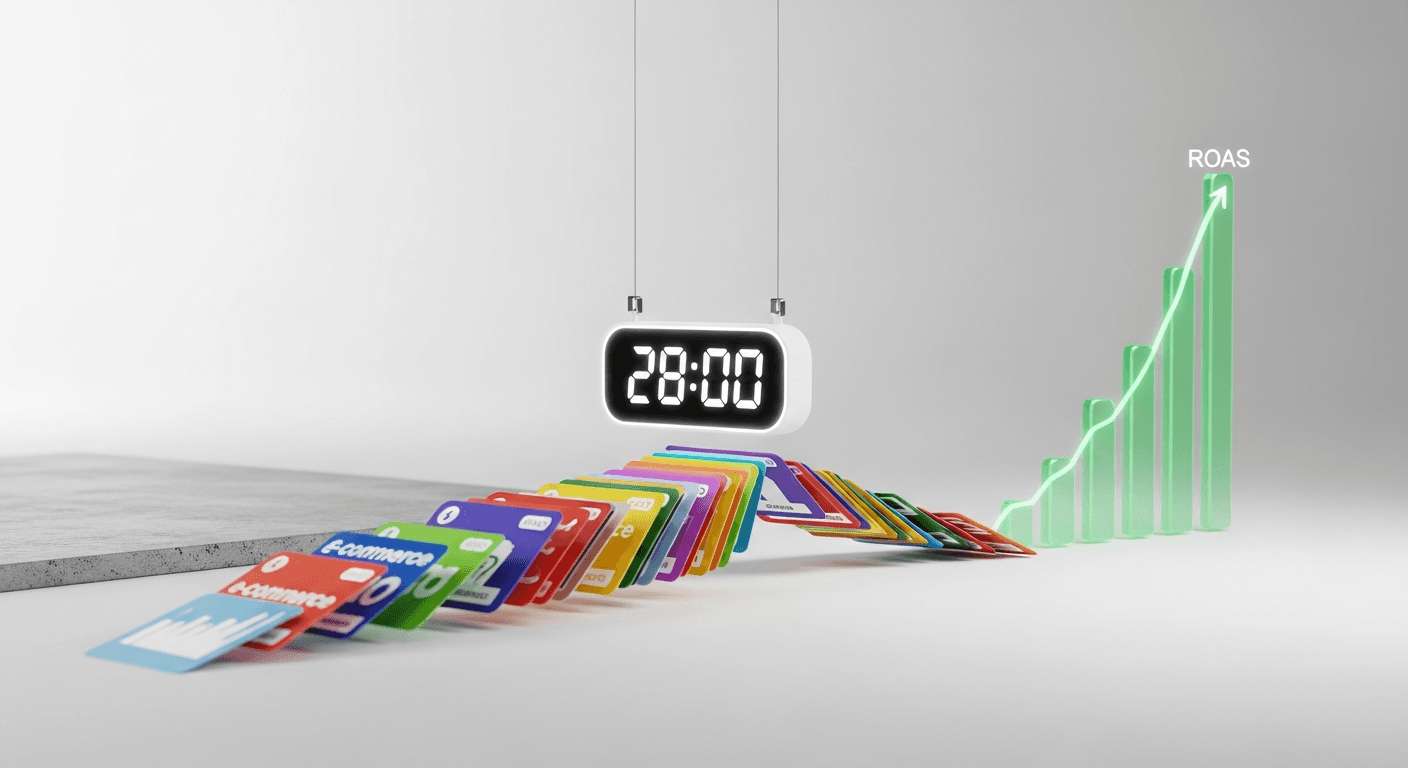
We built a system specifically for static ad graphics that operates on a strictly optimized 28-hour turnaround. This isn't about rushing - it's about removing friction.
When you request a static ad set from us, we don't spend three days concepting. We take your strategy, apply high-converting frameworks, and deliver the assets while your media buyer is still thinking about the campaign structure. This allows you to test 5x more creative angles per week than your competitors.
When you remove the bottleneck of production, you unlock the full potential of your ad spend.
Cheers,
Guranshish