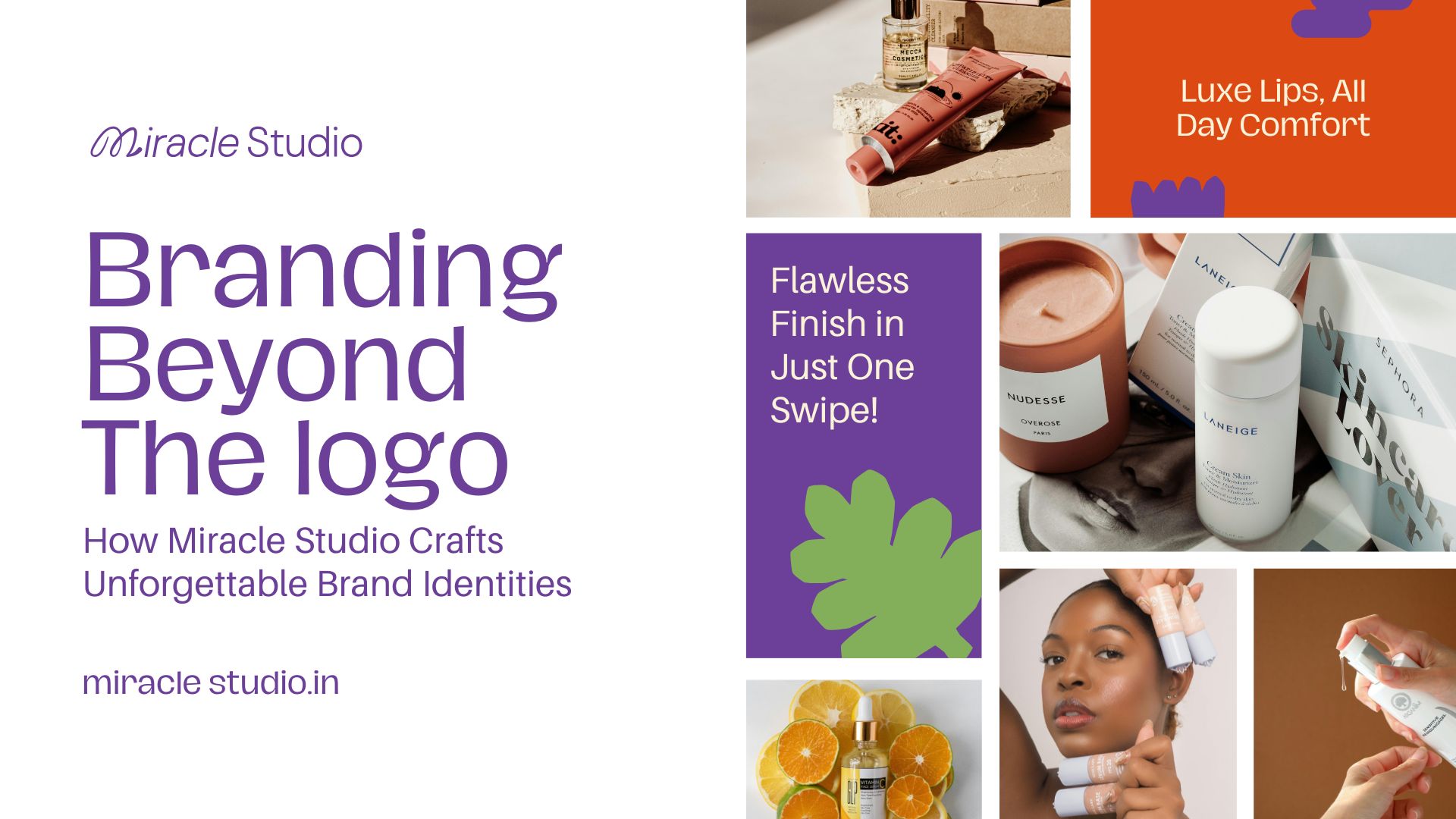
Most founders treat their brand as a visual asset. A logo, colours, a font. Something you commission once and then apply to your marketing. But this misunderstanding of what a brand actually is explains most of the brand failures in Indian D2C - and why founders who understand it differently build businesses that are fundamentally harder to compete with.
TL;DR
A brand is not a logo - it’s the accumulated impression your business creates in the mind of everyone who encounters it
Everything your business does contributes to that impression: your product, your packaging, your customer service, your pricing, your content, your founder’s behaviour
“Branding beyond the logo” means understanding and deliberately managing all of these contributions - not just the visual ones
This post covers what your brand actually is, what contributes to it, and how to think about managing it strategically
The Logo Misconception
When most founders say “we need to work on our branding,” what they usually mean is: we need a better logo, or we need to update our visual identity.
This is understandable. The logo is the most visible, most specific, most commissionable aspect of a brand. You can point to it. You can replace it. You can pay someone to make it better. It feels like a concrete problem with a concrete solution.
But the logo is the least important thing about your brand.
It’s the least important because it does the least work. The logo doesn’t make customers trust you - consistency does. The logo doesn’t make customers feel something when they see your brand - accumulated experiences do. The logo doesn’t make customers choose you over alternatives - positioning and perceived value do.
A great logo without substance behind it is a beautiful container for nothing. A mediocre logo applied to a business with strong positioning, consistent customer experience, and a clear point of view will outperform the beautiful container every time.
This isn’t an argument against investing in a good logo - a good logo is necessary, and a bad logo is a trust liability. It’s an argument for understanding that the logo is the beginning of the branding conversation, not the end of it.
What a Brand Actually Is
A brand is the accumulated impression that exists in the mind of everyone who has ever encountered your business.
Not the impression you intended to create. Not the identity you designed. Not the positioning you documented. The actual impression - the feeling, the associations, the expectations - that lives in the mental models of your customers, potential customers, and anyone else who has come into contact with your business.
This impression is built by everything your business does. Every customer interaction, every product delivered, every social media post, every price point, every founder decision that becomes public knowledge, every review that gets written, every complaint that gets handled well or badly - all of these contribute to the accumulated brand impression.
This means your brand is not something you design and then deploy. It’s something you manage continuously, through every decision your business makes.
The logo is one input into that impression. It’s not a small input - visual identity is a powerful signalling system that shapes how people interpret everything else they encounter about your brand. But it’s one input among many, and often not the most important one.
The Six Things That Build (or Destroy) Your Brand
1. Your Product or Service Quality
The most fundamental input into brand impression is whether what you sell actually does what you say it does. A brand that promises premium quality and delivers mediocre quality builds a negative brand impression no matter how beautiful its visual identity is.
This seems obvious, but the implication is often missed: brand investment only produces compounding returns when it’s matched by product or service quality investment. A brand can temporarily bridge a product quality gap - good visual identity can attract first-time buyers who might not have otherwise tried the product - but it cannot sustain loyalty if the product doesn’t deliver.
The sequencing matters: invest in making your product genuinely good before investing heavily in making your brand look good. Then let the brand investment amplify the word-of-mouth that quality generates.
2. Your Packaging and Physical Presentation
For any brand selling physical products, packaging is the most important brand touchpoint that most brands underinvest in.
Packaging is the first physical experience a customer has with your brand. It’s the moment where the promise made digitally either meets reality or disappoints it. A premium digital presence followed by a generic unboxing experience is a brand promise broken at the critical moment.
Packaging also has unique leverage: it’s seen, photographed, and shared by customers who are already sold on the product. Good packaging generates organic sharing that advertising can’t replicate at the same cost. Bad packaging suppresses sharing and creates the impression that the brand doesn’t take its presentation seriously.
The brands that have built strong brand recognition through packaging in India - The Whole Truth’s radical transparency, Sleepy Owl’s warm and distinctive visual language, Arata’s clean and modern approach - have all made packaging a primary brand investment, not an afterthought.
Related: Packaging as a Marketing Channel: The Unboxing Psychology You’re Probably Ignoring
3. Your Customer Service and Communication
Every interaction a customer has with your team is a brand interaction. The tone of your response to a complaint, the speed of your replies, the language of your automated emails, the experience of returning a product - all of these either confirm or contradict the brand impression you’ve built through your visual identity and marketing.
A brand that communicates warmth and care in its marketing but responds to customer complaints with defensive, template-language is not a warm and caring brand. It’s a brand with a gap between its stated values and its operational reality. Customers experience the gap, even if they don’t articulate it.
The brands with the strongest retention are almost always the ones with the most consistent customer service experience. Not the most elaborate - the most consistent. Customers form expectations; consistent service that meets expectations builds trust. Inconsistent service breaks it.
4. Your Pricing and How You Communicate It
Pricing is a brand signal. Every price point communicates something about what category your brand belongs in and what kind of customer it’s for.
A brand that positions as premium but prices at the low end of the market creates confusion. A brand that prices at a premium but delivers a generic experience creates disappointment. A brand whose pricing is aligned with its positioning and backed by an experience that justifies it creates the trust and expectation alignment that builds loyalty.
How you communicate pricing matters too. Hidden pricing, complicated tiers, and unexpected fees create a brand impression of untrustworthiness. Transparent pricing - even at premium levels - communicates confidence in the value you provide.
Discounting is the most common way brands inadvertently damage their own brand impression. A brand that discounts regularly teaches its audience that the list price is not the real price - which undermines price credibility permanently. The brands with the strongest brand impression almost never discount publicly.
5. Your Content and How You Show Up
Everything your brand publishes - every blog post, every social media update, every email newsletter, every founder interview - is a brand impression in motion. It either reinforces your positioning or dilutes it, either expresses your values or contradicts them, either builds familiarity or adds noise.
The brands with the strongest brand impressions treat every piece of content as a brand decision. Not just “is this good content” but “does this feel like us, does it reinforce what we stand for, does it attract the right people and repel the wrong ones?”
This is why a strong tone of voice is as important as a strong visual identity. The visual system shapes the first impression; the voice sustains the relationship. Brands that look distinctive but sound generic lose the advantage their visual identity creates at the moment of engagement.
Related: How to Write a Brand Manifesto (With Examples)
6. Your Founder’s Behaviour and Visibility
In most D2C brands, particularly in India, the founder is the brand’s most powerful communication channel - whether they actively manage it or not.
The founders who have built the strongest brand impressions in Indian D2C - Shantanu Deshpande at Bombay Shaving Company, Ghazal Alagh at Mamaearth, the team at The Whole Truth - have all treated their personal visibility as a brand asset. Their posts, their opinions, their transparency about business decisions all contribute to the brand impression their company creates.
This doesn’t require a large following or a formal personal brand strategy. It requires authenticity and consistency - sharing real decisions, real challenges, and genuine perspectives in a way that reinforces what the brand stands for.
A founder who says one thing publicly and does another operationally creates a brand impression problem that no amount of design work can fix.
Why This Matters: The Strategic Implications
Understanding that your brand is the sum of all impressions - not just the visual ones - changes how you prioritise.
Every operational decision is a brand decision. How you handle a supply chain failure, how you respond when something goes wrong, what you charge for shipping, how long you take to process returns - all of these are brand decisions as much as they are operational ones. The brands that manage this understanding most effectively treat branding as a cross-functional responsibility, not a marketing function.
Investment in brand goes beyond design spend. Investing in training your customer service team on tone of voice, in packaging that matches your digital positioning, in pricing transparency, in founder visibility - these are all brand investments with real returns. Many of them produce better brand outcomes than an equivalent spend on visual identity.
Your brand’s reputation is your most valuable asset. Unlike physical assets, brand reputation compounds over time and is extremely difficult to replicate. A brand that has built genuine trust - through product quality, consistent experience, transparent communication, and authentic positioning - has built something that competitors cannot acquire regardless of their budget.
Inconsistency between what you say and what you do is the biggest brand risk. Brands fail not usually because they designed the wrong logo but because they created a gap between their stated values and their operational reality. Closing that gap - making every part of the business an accurate expression of what the brand claims to be - is the most important brand work most businesses could do.
A Practical Audit: Is Your Brand Bigger Than Your Logo?
Ask these questions honestly:
Is your product or service quality consistent with what your brand promises visually?
Does your packaging match the quality positioning of your digital presence?
Does your customer service feel like it comes from the same brand as your marketing?
Is your pricing aligned with your positioning, and do you protect it?
Does your content reinforce your brand’s positioning, or just fill a calendar?
Does the founder’s public behaviour reflect the brand’s stated values?
If you answer yes to all six, your brand is bigger than your logo. If any answer is no - that’s where your brand investment should go next. Not a new logo. The operational and experiential reality that the logo is supposed to represent.
FAQ: Branding Beyond the Logo
If my logo is fine, should I invest in branding at all? Yes - especially in the non-visual dimensions. Customer experience consistency, tone of voice, pricing strategy, and content quality all produce brand outcomes that the logo cannot. A fine logo applied to an excellent customer experience is a strong brand; a fine logo applied to an inconsistent experience is a mediocre one.
What’s the most overlooked non-visual brand investment? Tone of voice. Most brands spend significant time and money on visual identity and almost no time on verbal identity. The voice is heard in every piece of content, every customer communication, every product description. Getting it right compounds significantly over time.
Can a brand be damaged by founder behaviour? Absolutely - and quickly. The founder is visible in a way that brands themselves rarely are. Behaviour that contradicts the brand’s stated values creates cognitive dissonance for customers who have built loyalty based on those values. The damage can be severe and difficult to repair.
How do you align the whole business behind the brand? Start with a clear, specific brand positioning that everyone in the business understands. Then evaluate every function - product, operations, customer service, marketing, sales - against that positioning. Where there are gaps between the positioning and the operational reality, close the gap.
Conclusion: The Brand Is the Business
The most useful reframe of “branding beyond the logo” is this: the brand is not a function of the business. The brand is the business, as experienced by everyone outside it.
Every decision the business makes either builds the brand or erodes it. Every customer interaction either reinforces the brand impression or damages it. Every product quality call, every pricing decision, every communication choice - these are all brand decisions.
The logo is the flag. Everything else is the country it represents. Make the country worth flying the flag for.
If you want help thinking through where your brand’s biggest gaps are - between what you’re saying and what customers are experiencing - book a call with Miracle Studio.
Miracle Studio is a brand identity and packaging design agency based in Faridabad, India. We help D2C founders build brands that are bigger than their logos. See our work or get in touch.